

First Estate Main Works
The First Estate Main Works is a 47-hectare industrial subdivision delivering 10 large lots designed for bulky goods warehousing, manufacturing and storage. Previously rural land, it was rezoned to meet Western Sydney’s growing industrial demand. Co-Infra was engaged under a design and construct contract to deliver the entire subdivision civil package, including around 2,000,000m³ of imported fill to raise the structures above flood levels. The scope includes detailed stormwater management, sewer pump systems, potable water connections, HV electrical, telecommunications and street lighting, as well as major road upgrades featuring new signalised intersections and acceleration lanes coordinated with TfNSW. Project delivery required strict fill sourcing and environmental compliance, careful authority coordination, and innovative thinking to maintain the program during extreme wet weather and accelerated timelines.
Signalised TfNSW intersection design changes to achieve $1–2m savings
A critical element of the project scope involved delivering a new signalised intersection with acceleration/deceleration lanes and road widening works for TfNSW. During the detailed design and approval stages, TfNSW revised their design brief late in the process, requiring the crown of the road to be realigned, shifting the intersection footprint and increasing asphalt quantities, risking $1–2m in additional costs. Co-Infra identified and flagged the impact of these changes both from a budget and program perspective. Instead of accepting a blanket redesign, our team coordinated closely with TfNSW and designers Arcadis, leading focused workshops to assess and analyse subgrade and pavement requirements. Through this process, we developed a solution to use heavy pavement treatments in problem areas by undertaking targeted geotechnical investigations, including additional DCP testing to map subgrade strength in higher detail, thereby avoiding unnecessary costs.
Going to any length to ensure tenants achieve on-time occupancy
During the course of this project, unavoidable delays to connections caused by shortages at Sydney Water (due to a lack of firefighting water supply), threatened tenant occupation timelines, including the securing of occupation certificates, creating major issues for developers and tenants. Co-Infra identified this risk early in the approvals phase and worked closely with the client, Council, certifiers, authorities and the tenant to design an interim solution. The creative solution that Co-Infra General Manager George Henien proposed to counter the looming challenge was a large above-ground water tank system (each with a 30,000–50,000L capacity), ingeniously engineered with skids, feet, manifold pipework and pumps that met firefighting standards. Co-Infra procured these tanks, arranged RMS escort, delivered in a coordinated sequence and ensured operationality. By implementing this interim supply idea, Co-Infra secured council and certifier approval for tenant occupation certificates, keeping the project on track despite service authority delays. Once the permanent system was installed, the tanks were removed and donated to local farmers, providing long-lasting community value.


Accessing imported fill to raise building pads above flood levels
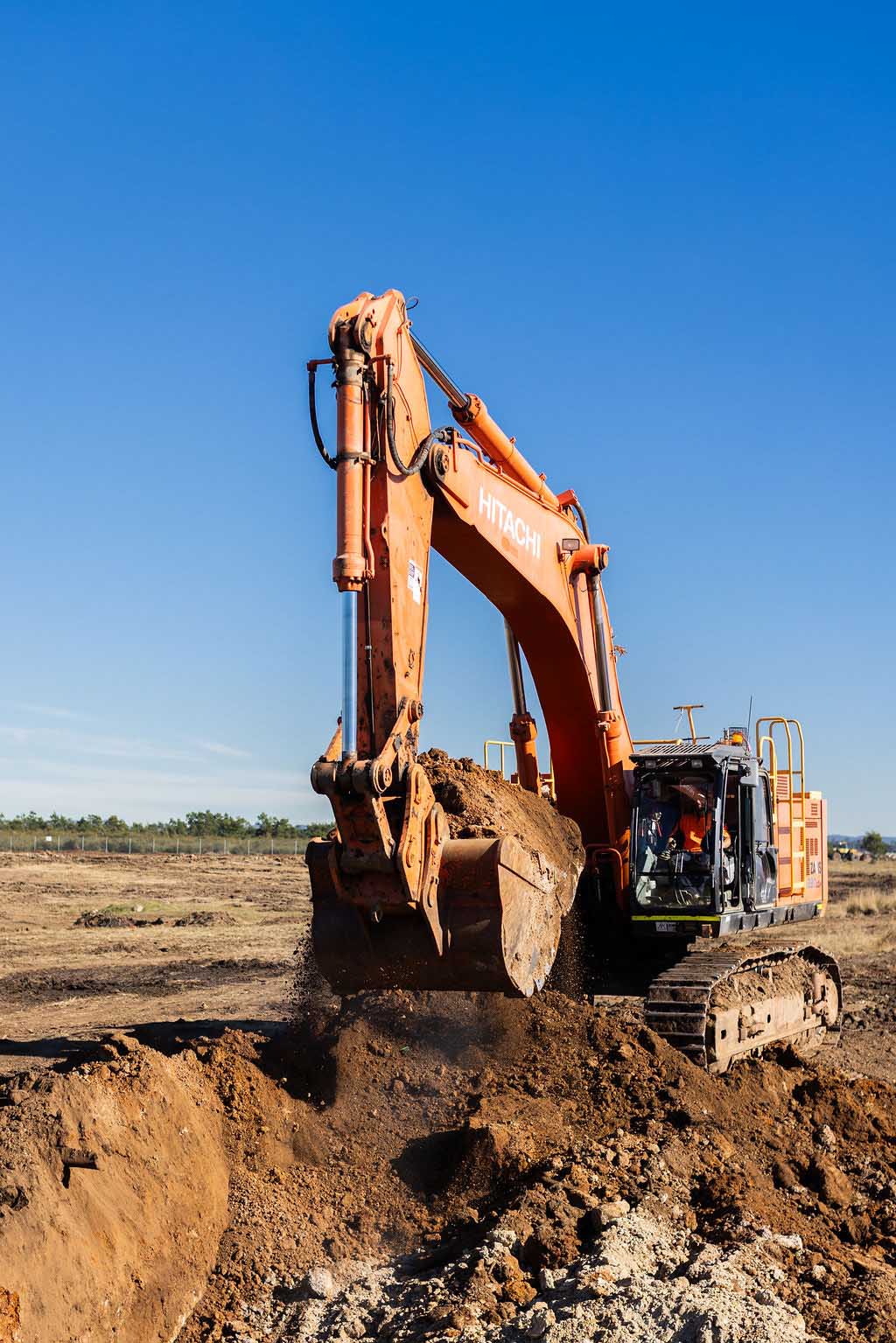
The existing site was low-lying and prone to flooding, and needed to be infilled significantly to meet approved design levels and ensure long-term usability. The project required approximately 2,000,000m³ of clean structural fill, meeting environmental and planning requirements. Co-Infra developed an import fill protocol, engaging key suppliers and individually assessing and approving source sites, carrying out on-site inspections to verify quality and ensure all imported fill met consent authority requirements. Transport logistics were carefully planned to ensure haulage routes were scheduled and each load inspected on arrival to prevent contaminated or non-compliant material entering the site. Co-Infra’s management ensured compliant delivery and a massive fill program met all required flood design requirements, while maintaining the program for this subdivision-ready industrial development.
